Showing posts with label ASEAN. Show all posts

Monday, 28 March 2016

How far can your Malaysian Passport take you?

 Holding a Malaysian is a certification for that of a Malaysian citizen or one certified to stay in the country. A Malaysian passport can allow the holder to gain access to several countries without the requirement of a visa.

There are a few limitations where Malaysians are denied access to and one of these are Israel where Malaysians are completely barred from entering.

According to the Henley and Partners visa restrictions index, Malaysia's passport ranked 12th for being slightly more versatile for traversing several countries without the need to apply for a visa.

Here are a few of the countries that Malaysians can enter without much hassle. The link below leads to an official online document that provides a detailed list for countries that allow visa-free travel or countries that requires a visa.

For Malaysians planning to travel overseas to another country, do check out the link and check for the requirements of the travel destination country. Therefore, till the next time, we wish everyone to have safe and wonderful travels no mattter where one is.

Friday, 25 March 2016

5 popular beaches in Philippines:

Boracay, Aklan:

White, smooth sand surrounded by clear blue pristine water with lapping waves; Boracay beach is one of the infamous destination in Philippines for vacation-goers. Aside the soaking up the sun, diving in the sea or trying water sports; Boracay hosts a myriad of activities in the night to cater to the variety of night-life on the beach. The beach is also featured in CNN as one of the most beautiful beaches in the world in 2012. 

El Nido,Palawan:

Accessible by both air and sea, El Nido is another sunny paradise surrounded by a whole spread of wildlife and scenes of nature. Known in another name as “The city of Gods”, El Nido's boasts karst limestone formations, peaceful lagoons, caves and waterfalls that can take your breath away in complete awe of their beauty. Aside being a getaway location for travellers, El Nido is a utopia for marine life that has a vast and diverse ecosystem. 

Samal Island, Davao City:

Famous amongst fellow snorkelers and divers for it's crystal-clear waters, rock formations, mangrove areas and coconut palms dotting the sandy whites of the beach. The flow of tourists into the area is slowly gaining pace due the multiple numbers of resorts available. With a wide stretch of land , there is plenty to explore and discover while taking in fully the scenery and embracing the surrounding nature.


Panglao Island, Bohol:

A little ways away from Bohol, Panglao is a beach slightly similar to Boracay. With it's diving spots, fine sands, and blue ocean waters; it is known as the “little paradise of pure hearts”. Aside swimming alongside the aquatic marine life in the fine clear waters, another attraction is the Chocolate Hills. No, the hills aren't made out of chocolate but that is how the locals call the unique dome-shaped hills on the island that turn brown during the dry seasons. 

Pagudpud/Bangui, Ilocos Norte:

A quiet holiday destination that has travel constraints to control the influence of commercialism. This allows the sense of space for anyone seeking a less crowded location to soak up the sun rays and surf. Located on the northern tip of Luzon, there aren't much places for one to shop and the number of ATMs are limited. This might not appeal much to shopaholics though but the peace is a great change of pace for those searching for a break from the hustle and bustle.

Such gems of beaches are a rare find and are a real draw for those who just love to surround themselves in the cool embrace of the waves or feel the sun on their backs. Philippines is filled with such wonder of nature and for anyone heading there soon, don't forget your sunscreen!. Till next time, safe travels and have a fun trip everyone!!


Thursday, 24 March 2016

UNESCO Heritage sites in South-east Asia:

UNESCO has a total of 37 heritage sites in the South-east Asia region and these are all scattered throughout various countries and locations. These sites are established to preserve the history and culture of the locations and it is an important asset to the country and the world as a whole as it documents lifestyle and culture. The countries that are included are Indonesia, Vietnam, Malaysia, Philippines, Singapore, Laos, Myanmar, Thailand and Cambodia.

In this list, we'll be covering one heritage sites from the each of the various countries starting with:

Indonesia: Komodo National park

Indonesia is the one country that is known to be the native land of the world's largest giant lizards. The Komodo dragons aren't actual dragons but lizards of massive size. Their native birthplace is this island which is now turned into a national park in order to preserve them.

Vietnam: Hoi An

Hoi An is an important trading port where trade was centered in the 15th to 19th century. The town has traces of numerous local and foreign influence. However, the history, culture and infrastructure is well preserved and seeps through the ages till today.

Malaysia: Kinabalu Park

All of Malaysia's 13 states has a unique quality that each state is best known for and towards the East, on the state of Sabah is one of the highest mountains in the Asian region. Mount Kinabalu is one of the mountains with a peak so high that plenty of climbers challenge.

Philippines: Tubbataha Reefs Natural Park

Divers would love this site as the pristine and clear waters reveal some of the world's hidden treasure under the depths of the waves. The Tubbataha Reefs Natural Park hosts a variety of coral reefs and marine wildlife.

Singapore: Singapore Botanic Gardens

Reminiscent of a European-style botanic garden of plants established under British rule in 1859. From then onwards, it stands as a landmark representative of Singaporean history and culture while relative and significant of science, education and the importance of conservation.

Laos: Town of Luang Prabang

Luang Prabang, a town filled with the history and splendour that presents itself as the ancient capital of the old kingdom of Laos. Luang Prabang's buildings blends and combines those of Asian and European cultures that comes together to create the uniqueness that is Luang Prabang.

Myanmar: Pyu ancient cities

The three ancient cities of Halin, Beikthano and Sri Ksetra remains from the Pyu Kingdom that lasted for eleven centuries from 200 BC to 900 AD. The ruins breathe of a rich Buddhist culture left behind from royal, religious structures and an irrigation system.

Thailand: Historic city of Ayutthaya

Nestled in the Ayutthaya province, this historic city was once the capital of the Kingdom of Siam. The remains of the destruction of the Burmese in the 18th century speak aloud of the religious and administrative buildings that once stood proud; hinting towards the city's majestic history.

Cambodia: Angkor Wat

Angkor Wat is infamous amongst the South-east region as a major archaeological site filled with the beauty of ancient remains of the Khmer Empire. The site includes the famous temple of Angkor Wat, the Bayon Temple, and the jungle covered Ta Phrom Temple being part of the arsenal.

Here area few of the different UNESCO heritage sites around the South East Asia region. We hope that you have a great time if you happen to come across these amazing sites. Till the next post, safe travels everyone!

Wednesday, 23 March 2016

Why is the Ringgit called the Ringgit? :

The Malaysian currency is called a unique name that is different from the 'Dollar' name that a lot of countries use. It is called the 'Ringgit' and it's currency code is 'MYR'. The name means  'jagged' in the Malay language which referred to the serrated edge of Spanish notes that were circulated in the country back then.

The currency is issued by the national bank of Malaysia called Bank Negara Malaysia. The abbreviation for the currency is coded as 'RM' which signifies 'Ringgit Malaysia'. It's history dates back to June 2, 1967; where Bank Negara Malaysia issued the notes to replace the Malaya and British Borneo dollar on par.

The denominations currently as of 2016 are 1, 5, 10, 20, 50, 100 Ringgit notes. The images below are a specimen of how they look like.

The coins are called 'Sen' in Malay or 'Cents' in English. The coins are denominated to be  5, 10, 20, 50 cents. These can be counted to be 10 sen = 1/10 of 1 Ringgit.
After the issuing of the notes back in 1967, Malaysia adopted a free-floating currency trading policy abut 2.50 compared to the US Dollar. The Ringgit has devalued from 2.50 to 3.80 on the exchange trades by the end of 1997. The currency has continued to devalue until this day and has fluctuate unstably for quite while. 

Currently, the median exchange rate is 1 USD to 4 MYR and 1 EURO to 4.5 MYR. That being said, we hope that these information will help anyone heading to the Malaysia for holidays. Be sure to have your notes exchanged before your trip but no worries if you fail to do so on a sudden trip as the international airports do accept a variety of currencies. Till next time, safe travels eveyone!!

Tips to know before travelling to Malaysia:

Malaysia is an Islamic country and due to it's diversity of race, religion and culture; it is a wonderful place to visit and explore. Malaysian's are friendly in general and most are able in speaking the English language. However, there are certain rules and regulations that would be extremely helpful before entering the country.


 Below is a list of a few things to watch out for when visiting the country.

  1. Clothing: Malaysia is a country of tropical climate and is hot and humid all year round except during the monsoon season. Therefore, travellers tend to wear light and thin clothing to keep heatstroke away. However, it is best for one to wear clothing that covers the arms and legs before entering a place of worship.
  2. Shoes: Unlike the western culture, Malaysian's do not wear shoes into their houses. So do make sure to take of your shoes before entering someone's house. This rule applies to mosques as well and some may require the person to wash their feet before entering the premises.
  3. Eating ethics: When eating noodles, do not slurp it as it reflects bad manners. One can request for the regular fork and spoon if using chopsticks is not an option. It is a norml sight for some people to eat using their hands in certain places but if it's at an Indian stall, refrain from using the left hand.
  4. Cuisines: Malaysian cuisine is normally flavourful and filled with an assortment of flavours that will dance on your tastebuds. However, half of the dishes available may come cooked or drizzled with spices. So, for anyone out there who can't take spicy foods, you might want to check if the dish you order is spicy before confirming it.
  5. Religion: Being an Islamic country, there are times where masses of Muslims go and pray and prayers can be heard in the close vicinity. This is normal and on Fridays in particular, Muslims would leave work early to go to the mosques to pray. Do not be alarmed if you see crowds of people flowing into the mosques on Friday; it's just prayer time.
  6. Pork: When visiting Malaysia, the triangular sign with the word “Halal” is present in many places. This refers and relates to the fact that Muslims are not allowed to eat pork. If a restaurant has this sign, it means that the restaurant does not serve pork. If you're a pork lover and can't live a day without consuming pork, it might be a good idea to stick to Chinese restaurants that do normally serve pork.
  7. Safety: When visiting, it is wise to not have gold or expensive jewellery or expensive looking ones on you. It is not to say that Malaysia is completely unsafe but crime may happen and prevention is way better than cure.

By understanding more about our destinations, it shouldn't be too big of a problem for one to commute or coordinate around the wonderful cities of the 13 different states of Malaysia. Till then we wish everyone a safe travel and a wonderful trip throughout Malaysia.

Tuesday, 22 March 2016

Top 10 phrases to learn before a visit to Malaysia


Malaysia, a nation brimming with beautiful and spectacular natural scenes and locations. It practically screams perfection for a retreat; be it to the mountains or the beaches or into the cool canopy of Sarawak's rainforests. Despite most of the younger generation being able to understand English, Malay is considered the national language. With communication as key, here are a few Malay phrases we suggest to everyone to learn before your trip to Malaysia. 


1. Sorry/Excuse me – Minta maaf (Mint a mah uff)
2. Thank you/Welcome – Terima kasih (Ter rih ma Kah sih)/Sama – sama (Sah mah sah mah)
3. What is this? - Apa ini? (Ap pa in ni)
4. How much? – Berapa? (Ber ah pah)
5. Expensive/Cheap – Mahal (Mah hull)/ Murah (Moo rah)
6. Water – Air? (Ire)
7. Can (verb) – Boleh (Bow lay)
8. Help – Tolong (Tow long)
9. Yes/No – Ya (yea)/Tidak (Tea duck)
10. Don't understand – Tidak faham (tea duck fa hum)
11. Toilet – Tandas (tun dus)

One need not worry as some English phrases work and the locals do understand English to a certain extent that doesn't cover overcomplicated phrases or sentences. Therefore, it is still better to know a few Malay sentences to help us out in a sticky situation. Till next time, safe travels everyone!

Monday, 21 March 2016

Phuket: An over-commercialized “heaven” for tourists?


Like some other conservative travelers who enjoy a relaxing beach sunset while sipping a bottle of coke, some of us may enjoy the serenity or tranquility which we may find on islands and beaches. Upon Google search on where to go in Southeast Asia for these beaches, Phuket comes out in the list.
    

For first-time travelers in Phuket, most of them will either straight away head to the famous Patong beach or Kata beach once landed from the airport. Dreaming of a serene view overlooking the sea, you may find yourself in shock. Crowded beaches with Russians and Chinese will be the first thing you will see.

After strolling down the beach sometime, you may want to find a place to just sit down or hang out. Once you sit down, you will “bombarded” by mat sellers or just some random umbrella vendors. Some of them will be rather rough when you try to bargain. The dream of enjoying a serene sunset by the beach? Busted.!

Nightlife around the main beaches in Phuket may also be a mess. Loud booming EDM , drunkards, and hookers. The worst case scenario for travelers who enjoys calm, serene environment.

What we recommend is spend minimum time to explore these over-commercialized spots in Phuket such as Patong or Kata beach. Spend some time staying in condotels of Phuket town enjoying the real local livelihood of Phuket islanders or go to some underrated beaches such as Yan Nui beach which is situated not far from the Promethep Cape.


Some detailed planning will help you from dropping in just another tourist trap in Phuket.

Top 10 phrases to learn before a trip to Vietnam

Vietnam is a beautiful place to visit and like the adventurous people that we are, it is better to research on the language or destination before the trip. This will help us communicate better with locals and save us from a pinch. Here are 10 phrases which we think will be useful in learning before heading to Vietnam.


1. Hello! - Xin chao! (sin chow) Greetings are very important.

2. Thank you - Cam on (gahm uhn) Expressing thanks show gratitude.

3. Sorry/Excuse me - Xin loi (seen loy) Useful for apologizing or asking for directions.

4. Do you speak English? - Ban co noi duoc tieng Anh khong?

5. Can you help me? - Ban giup toi duoc khong? (ban zoop thoy duc khom?)

6. What is this? - Cai nay la gi (guy nai la zee)  Clarify what items or food are.

7. How much? - Bao nhieu (bow nyew) This phrase comes up often when eating or shopping.

8. Do you have a cheaper price? - Ban co gia nao re hon khong? (Used in bargaining)

9. Water - Nouc (Water is crucial to survival and being able to ask for some is useful)

10. Where's the toilet? - Nha ve sinh… o dau? (ngha ve sin o dau?) Useful in a toilet emergency.


We hope that this short compiled list will turn out to be of help to everyone. Till next time, safe travels everyone!

Sunday, 20 March 2016

Haze: An annual "norm" in Southeast Asia?

From the annual “plantation burning ritual” in Indonesian grounds to the uncontrollable forest fire in the north of Indochina, Haze has already becoming a more and more serious issue in this part of this world.

Southeast Asia not only offers the great convenience of an international hub, but also is blessed by the abundance of beautiful natural resources. From the sandy beaches in Koh Samui of Thailand to the mountains in Crocker Range of Malaysia, southeast Asia attracts millions of visitors around the world annually.

However, haze problems has been dramatically growing during these past few years. With hazardous PSI levels heading up to nearly 250 in Singapore, it has severely affect the good tourism reputation of most countries in Southeast Asia.

Although the ASEAN governments has “dramatically” come up with new partnerships to cope with the severe haze, the haze problems had not been resolved in these past few years. Recent haze which strike Chiang Rai of Thailand and also parts of East Malaysia has is becoming an annual norm for people living there. 


What strikes us is till when the ASEAN community can come up with a haze remedy not only to protect our natural resources but also to protect our own Southeast Asians? 

What to bring for trips in Tropical Climates?

Most parts of Southeast Asia are under tropical climate regions and a visit to there may be a disaster if one do not prepare well. Here are some items to keep a traveller checked when visiting Southeast Asia:


1. Mosquito repellent/Bug repellent:


Tropical climate regions are the best breeding ground for bugs and mosquitoes. Mosquito or bug repellents is a must to prepare before heading to tropical regions such as Southeast Asia

2. Foldable Umbrella:
 

Simply a shield for rain or shine. Make sure it is foldable which is more convenient to fit in backpacks.

3. Light-material backpacks:


A useful item to keep your stuff on the go. Canvas backpacks or other light-weighted material backpacks will not only be waterproof, but also will not be a hassle to bring during trips.

4. Slippers/Sandals:
 

This item will be of good use when going to the beach or when you simply just don't want to step on the carpet with your bare feet at the hotel.

5. Straw Hats:
 

A good alternative to bringing an umbrella. Plus, straw hats are light too.

6. Sunscreen:


The sunlight can be quite strong even during mornings in tropical climates. Applying sunscreen before heading out will minimize the damage done to your skin.

7. Sunglasses:


Not only to keep your coolness, but also to protect your eyes from the sunlight from time to time.

8. Small first-aid kit: 

An open wound or simply just a scratch may get worst or even attract unwanted diseases in tropical climates. First-aid kits which contain antiseptics, cotton and bandages will go a long way preventing you from being infected by tropical diseases.

9. A small packet of salt:


Especially useful for jungle travellers. Leeches and bugs of commonly found in the jungles of tropical climate regions. Salt can easily remove leeches from skin without doing any damage. 

Top 5 Slangs to learn when travelling to Malaysia

On the way

Usually used when you’re late for a formal event or a meeting session with friends. No matter what are you doing when the question is asked ( even still at home), Malaysians tend to use this 3 words to answer. A lot of times it is continued by Malaysians saying “ X minutes ah…”

Example:

A: Why so late? Everybody waiting for you , you know ?
B: On the way…on the way… 5 more minutes..!!


Cincai

The word “ cincai” literally means whatever. Malaysians use this word frequently when they are reluctant to make a choice or just to continue a conversation.

Example:

A: Where you want to eat today ?
B: Cincai lah.. Up to you…


Walao / Walao Eh

This phrase is often to describe the feeling of surprise or disbelief. Often, it is followed by a demanding question regarding the topic which strikes disbelief.

Example:

A: So sorry, I forgot to buy your share of tickets for the movie..
B: Walaoeh, How can you invite for the movie and forgot to buy my share leh ?


Tapau

Perhaps one of the most useful slang when it comes to travelers when buying food in Malaysia. “Tapau” means to take away servings of food.

Example:

A:Can I tapau a packet of Chicken Rice ?


That's why lah

The phrase literally translates into "that explains it" in proper English. Often used when Malaysians want to make a quick reasoning about something.

Example :

A: Oops..I’m being late again, coz’ stuck in the heavy traffic
B: That’s’ why lah.. always ask you to go out earlier but you don’t listen.


Friday, 18 March 2016

Dealing with Culture Shock? How ?


Do more Research 

Learn as much as you can about the new location before you go. This refers to the positive and negative sides of being in the region or country. From which sides people drive on to local cuisine and culture, sometimes even local religion, it is always good to understand more before stepping into a country. If possible, learn a few phrases of local greetings or daily conversations.

Willing to Learn

Be open-minded and willing to learning. Ask questions. If you are going to a place which has a different language or slang, consider taking a few courses in that language. One of the best way to combat cultural shock is actually to blend in the local scene. Mastering a few local “trick of the trades” will be helpful all the time.

Build new positive friendships

Even if you’ve done really good research, having someone who can help you in avoid culture shock and even coping up with the local pace. Surviving another culture is favourably easier when you have a person to guide you through the new little everyday experiences when you are travelling abroad.

Have an Adventurous Spirit

Eleanor Roosevelt once said “do something that takes courage every day,” . This is especially important for travelers when it comes to Survival 101 in a different culture. The only way to survive out of the monotonous comfort zone is to actually treat every day as an adventure ..

Stay in Touch with Family and Friends

Perhaps one of the most important element of all. This can give you some comfort while away, and it will help you to minimize reverse culture shock when you get back home. Spending some time conversing with family and friends back home will ease the anxiety of adapting to a new culture.


Interesting transports found in Southeast Asia


When travelling to South East Asia, there are certainly tons of alternative methods of transport across. From animal carts to crowded mini-lorries, these transportation are easily accessible to those who visit particular regions in South East Asia. Here are some of the interesting transportation methods.


 Cidomo 

Cidomo is a small horse-drawn carriage used in some parts of Indonesia. In the 1960s-70s, it was the main transport used in Bali, Indonesia. The carriage usually can seat up to 4 persons, with 2 person sitting in the front and 2 in the back. Till now, it is widely found especially in Bali and Gili Islands of Indonesia. Riding the Cidomo exploring suburban towns of Indonesia is definitely an interesting experience.


SongThaew

The songthaew , literally translated to English from Thai as Two Rows. This is a passenger vehicle commonly found in most areas in Thailand and Laos. It is actually a pick-up or a larger truck and used as a share taxi or bus. Nowadays, drivers of songthaew especially in Thailand can communicate with simple English resulting to a lot of western visitors actually use songthaew as a mode of transport in places such as Krabi or Phuket.


Tuk-Tuk 

Tuk-tuks or 'sam lor' (three-wheeled) is found in Thailand. Originating from an old-fashioned rickshaw during the second World War, a tuk-tuk is essentially a rickshaw with a small engine fitted in. Tuk-tuks have become one of Bangkok's most recognisable transportation features, and are still popular among tourists and visitors. The typical capacity for a tuk-tuk in Thailand is two average-size people or maybe three.


Trishaws 

The trishaws found in Malaysia are the cousins of Tuk-Tuk from Thailand. The only difference between them is the trishaws found in Malaysia are pedal-powered. Trishaws are a great way to travel through the historical alleys in parts of Malaysia such as Melaka and Penang. Malaysian Trishaws will usually ferry you through narrow lanes, offering closer view of historical sites at a most leisurely pace.


Xe Bo

Xe Bo is known as the bull cart in Vietnam. Visitors travelling to the outskirts in Vietnam such as Ninh Binh and Tam Coc will always encounter these bull carts. Although not the fastest way to travel through the roads, it may be an unforgettable experience to ride on one of these bull carts. As known, no matter it is one bull or 2 bulls pulling these carts, it will always be the same speed.


5 Reasons to Travel Solo Abroad


Confidence build up


The biggest obstacle whereby teenage travelers are reluctant to travel alone is the Confidence Issue. Confidence does not build up overnight obviously and takes time to nurture and grow. There is a saying, “ The more challenges you have, the bigger your world becomes”. Confidence can be built up by learning travelling skills and techniques such as learning a new language, learn navigating skills etc. When one can survive his or her own abroad while travelling, they definitely are confident in having a set of surviving skills or technique.


Experience, Experience and MORE EXPERIENCE.

Staying at home does not give you any new experience at all. Being too long in comfort zones may actually build up anxiety and panic when one’s get out in the real world. When we embark on new travels alone, we are “forced” in a way or another to gain more and more experience. Most importantly, we not only experience the new environment and new community during solo trips, but we also get to experience the ultimate feeling of being yourself solidary. Focus on the experience while travelling alone, you will always find yourself more engaged and attentive to the place you’re in.

f.R.I.E.N.D.S

Travelling alone does not mean that you wont have friends. In a lot of cases, travelling alone gives you more opportunities to make new friends. When you’re travelling alone, you simply can’t sit back and wait for a conversation to happen. You will need to find and get involved in the interactions and discussion with local community. Sometimes, it may be uncomfortable to make new friends, but always REMEMBER, be open to new conversations and be prepared to engage in local topics. A friendly smile will start it all.^^

FREEDOM AND FLEXIBILITY
Solo travelers have great capacity to exercise their freedom and flexibility. When you are not stick to specific schedule or need to be answerable to any group members, you can simply alternate visits or trips accordingly to your interest. Having freedom and flexibility may be the BIGGEST PERK of travelling solo as you can actually craft your own trip creatively and make the best use of it to your own interest and personality.

LESS DISTRACTIONS, MORE SIGHTSEEINGS

Travelling abroad with groups is always a game of compromise. Discussions need to be held again and again until sometimes till a point, it may seem planning a group trip is more tiring than the actual travel. By travelling alone, one can have obviously less distractions, and spend more time indulging the amazing activities you yourself plan. When one does not need to answer to questions and criticism, one can always enjoy a trip accordingly to one's interest.


Thursday, 17 March 2016

Where Mountain reaches the Sea - Gunung Santubong, Kuching, Sarawak


Although is about a 45 minute drive from Kuching City, we highly recommend  scenic lovers to visit places around Gunung Santubong. "Gunung" means Mountain in the local malay while "Santubong" is known as name of a legendary princess from Sarawak. As the mountain is situated on a geographical texture similar to an island, so, it easily overlooks the sandy beaches and the clear Sarawak ocean.

There is a park nearby the cultural village which overlooks both the sea and mountain. Although may be quite hot during afternoons, but it may be a good place to stop over just for a few shots of quality photography.


An iconic bird statue- Hornbill Statue is found here. As Sarawak is known as the "land of hornbills", which in Malay is known as "Bumi Kenyalang". 


The best part of this place is that they have a restaurant here. As the restaurant is just situated by the beach, it may be a good place to chill and have lunch or just a sip while enjoying the scenery.


One of the classic beach scenery taken there. 


The hornbill statue overlooking the lush green trees and the blue sea.

Kuching Festival- A Display ofCulture Diversity in Unity


 We did not planned beforehand to attend the Kuching Festival before our trip but was recommended by our Kuching friends to visit. After further research, we happened to find out the hotel we are staying, which is M HOTEL is actually just a few footsteps away from the festival.

Kuching Festival is held nearly a month in conjunction of Malaysia Day which falls on 16 September. According to friends, Kuching Festival is held several weeks before Malaysia Day and is usually one of the prime events in Kuching. To our knowledge, during the Kuching Festival, Sarawakians actually dismiss mall trips  visit this Festival every night.!


At first, we were stunned at the amount of food stalls in the festival. With easily 100+ food stalls, it is a big variety to choose from just for dinner or supper. Upon looking closely to the food stalls, we found out from local delicacies such as the Sarawak Laksa to Barbeque skewers, are being provided by vendors of different ethnicity and backgrounds.


What impressed us more is that the Kuching Festival actually imports Taiwan Food Stall Franchises and China Food Stall Franchises. A good example is this Hydrogen Ice-Cream Stall Shown above which we enjoy so much. Hydrogen Ice-Cream is actually the using of hydrogen to cool down the flavoured creams so that it have an Ice-cream texture. It was actually originated from Taiwan. 


This particular store which sells pancake with ice-cream attracts young crowds nearly every night. When we see the young crowds around the store, we saw from Malays, Chinese to other races all crowding and waiting in line for their turn to buy. This is such a common scene in Kuching.


The best part of this food night market in the Kuching Festival is that the organizers actually provide tables and chairs for people to actually sit down and eat. Tons of people are having their own feast around these tables.


Kuching Festival gives out a certain lively vibe similar to those in the famous ShiLin Night Market in Taiwan. The only difference is that the diversity of cuisines which can be found here is none comparable with any nightmarkets found in Taiwan. From Indian cuisine to Local Iban cuisine, From China BBQ Pork to Taiwan Ice-cream, what we are experiencing is actually a harmonizing of international flavours as one.


It is always great to visit Kuching, Sarawak, near the dates of the Kuching Festival around September. It is always mesmerizing and inspiring to experience a crowd which is diverse in terms of race and enjoying food of a long line of different flavours. Certainly, the Kuching Festival is a portrayal of Diversity being uniquely united.


For more information regarding Kuching Festival, you can refer to the following website:

https://www.facebook.com/pages/Food-fair-Kuching-Festival/403449269759768


Sunset cruising down Sarawak River in the Cat City of Malaysia


 One of the major cities in Sarawak, Malaysia , is named as "Kuching" which in Malay refers to the cat. Playing a major role as an exporter of timber and natural gas, Sarawak is not only one of the richest state in Malaysia, but is also the biggest state in Malaysia, boasting an area of 124,450 km^2.

Kuching is the capital city of Sarawak and also is the venue for prestigious international events and gala such as Jazz Festivals, Galas etc. More and more tourists are stopping by Kuching for a couple of days to explore en route to other major city hubs in Malaysia or Indonesia.


Sarawak River is well known as it flows through the middle of the city center. Iconic sites are situated near the riverbanks of the Sarawak River such as the Istana ( State Palace) and also the Dewan Rakyat ( State Parliament). Quality accomodation can easily be found along Sarawak River which enables one to overlook the beautiful horizon beyond Sarawak River.


One of our editors have went up on the Sarawak Cruise which along the Sarawak River. Sunset cruises or Dinner cruises are available on the piers of Sarawak River. Tickets for both cruises can be found near the piers and will cost from USD 15-30 per person. Duration of the Sunset cruise is about 1 -1.5 hours. There will be traditional dance performance featuring the local ethnics culture and also a free flow of beverages is available.


One of the iconic places which can only be accessed by cruising down the Sarawak River is the Brooke Dockyard. The Dock is being built by the Brooke Family from Great Britain during the 1800s to serve as a major dockyard for ships repairing. Although the operation has stopped since Sarawak gained its independence during mid 1900s, the structure remains there and serves as historical site till now.


The famous landmark which is across the banks of Sarawak River is the State Parliament. With a unique tent-like construction, it serves as a place for local ministers and leaders to interact and debate. 


A random Picture featuring the concrete bridge which connects transports and people from the both sides of the River. Taken during the Sunset Cruise at Sarawak River.


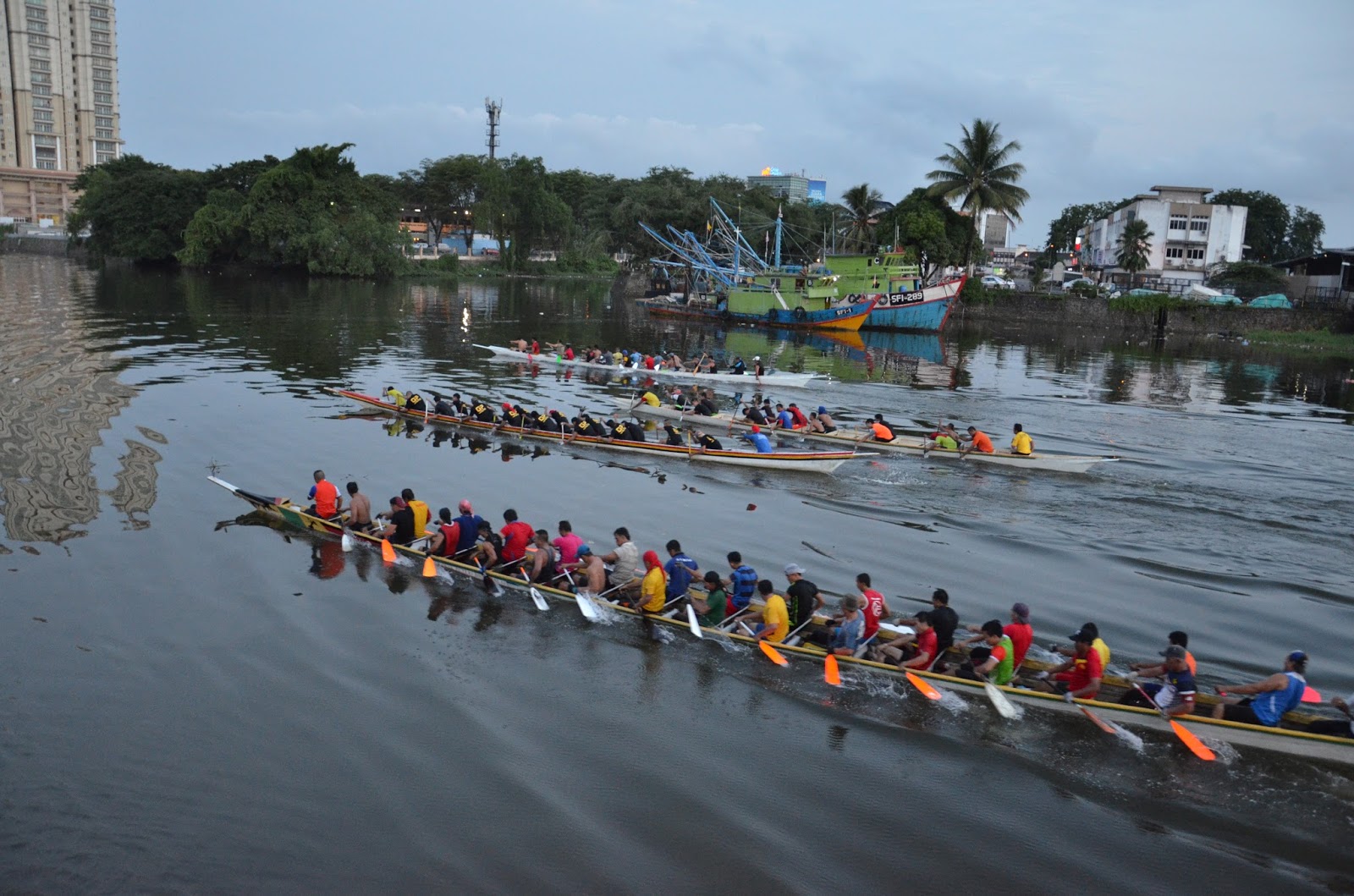
By having a diverse multi-cultural community, Kuching is made up of not only local ethnics such as Iban and Dayak, but also Malay and Chinese. We were lucky to see the practicing of the rowing of Dragon boats by the chinese across Sarawak River during the Sunset. 

Cruising at the Sarawak River for 1.5 hours the most is definitely a good way to spend the evening and it is certainly recommendable for travellers in Kuching.